
Miguel Zapata-Ros
PhD in Computer Science
Honorary Professor at the University of Murcia. Spain.
https://orcid.org/0000-0003-4185-5024
Web of Science ID L-3217-2013
https://www.webofscience.com/wos/author/record/L-3217-2013
Scopus 36477878800
https://www.scopus.com/authid/detail.uri?authorId=36477878800
Director of RED, Revista de Educación a Distancia (Scopus Q1)
Keynote Title: Generative Artificial Intelligence and education: Need for educational research for a new instructional design and a new assessment.
Bio: Dr. Miguel Zapata Ros holds a PhD in Computer Science from the University of Alcalá, a Master’s in Educational Theory from the University of Murcia, and a Mathematics degree from the University of Valencia. He is currently an Honorary Professor at the University of Murcia and a member of the PhD program in Information Engineering at the University of Alcalá. His research spans digital education, learning technologies, and university policy, with over 200 indexed publications. He has served as an international evaluator for the EU, A3ES (Portugal), and the UN-affiliated International Commission on Distance Education. He is the founding editor of RED Revista de Educación a Distancia, a Q1-ranked journal. Dr. Zapata has lectured at Cambridge and MIT, and advised universities across Europe and Latin America. In addition to his academic work, he is a successful novelist whose main character, Caradoc, features prominently in his literary contributions.
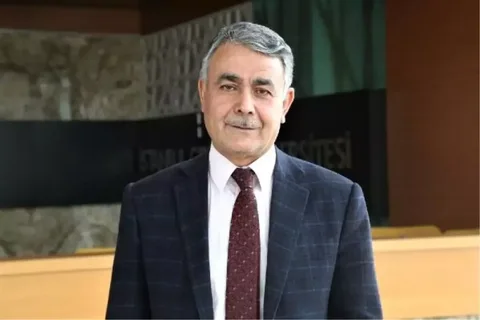
Prof Dr Hacı Duran
Istanbul Aydın University, Istanbul, Turkey
Keynote Title: Human Nature and Education in
the Context of Digital Culture
Biography: Prof. Dr. Hacı Duran
He is a scientist known for his sociological research and publications. He has conducted interesting research and published on perception management, the art of fabricating lies, and the manipulation of masses. He is interested in the problems of agitation and conflict environments in masses caused by the clash of historical documents, religious, legal, and national values. He has field-based research in the field of Educational Sociology. His published research includes: Pedagogical Problems in Educational Institutions in Adapazarı, Education in Adıyaman during the Republican Period, The Position of Teacher and Student Roles in the Face of New Educational Technologies, Educational School and Company, Teaching with Games, Oral, Written and Digital Language. He has published research on perception management and the comfort zone of social movements. In this area; He is known for his research titled “Marx’s Islamist
Ghosts”, “The Use of Islam as an Ideology in the Arab Spring Social Movements”, “Simulations, Ideologies and Ethnic Affiliations in the Middle East”, “Communities of Hybrid Identities”, “Mercenary Armies of Hybrid Identities”.
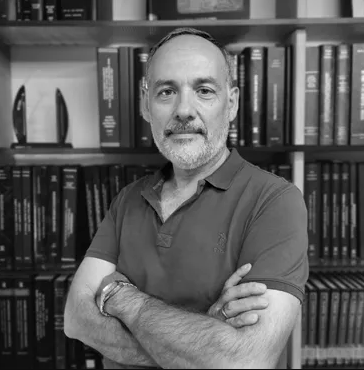
Prof. Dr. Jesus Garcia Laborda
University of Alcalá, Spain
Keynote Title: Geopolitics of teaching: Language, Learning, and Well-Being Across Global Contexts
Biodata: Dr García Laborda has a MA in ESL (University of Georgia), MA in English Language and Literature (University of Wisconsin), PhD in English Philology (Universidad Complutense de Madrid) and European Doctorate in Didactics (Universidad Complutense de Madrid). He has been Visiting Scholar at Penn State University and the University of Antwerp, and he has taught postgraduate courses in Lithuania, Cyprus, Turkey, Colombia and Brazil. He has also been the main researcher in four R&D projects and participated in eight more. In 2017-2018 he was Acting Director of the TAEG Knowledge Center (Cyprus) where he currently holds different positions. He has more than 270 published works. Since 2019 he has been the Dean of the Faculty of Education of Universidad de Alcalá, and before that he was the Director of the Department of Modern Philology of the same university (2016-2019). He is currently president of the European Language Association for Specific Purposes. Additionally, he is Editor in Chief of Revitas Encuentro (ESCI / web of Science), Global Journal of Foreign Language Teaching (ESCI / SCOPUS requested), Internal Journal of Learning & Teaching (ESCI / SCOPUS requested) and co-editor of Computer Assisted Language Learning Electronic Journal (SCOPUS), as well as a member of the scientific committee or evaluator of 15 other impact journals (JCR / SCOPUS / ESCI). He is a specialist in language teaching, assessment, educational technology and bilingual education.
Abstract: Teaching today is influenced by many geopolitical situations that happen in different parts of the world, which affect schools and universities in ways that are not always easy to see, but that change how education works in everyday classroom life. This paper looks at how things like migration, conflict, international connections, and language policies shape learning spaces, and how teachers work in contexts where there are many languages, cultures, and expectations, which can be enriching but also stressful. Language is very important because it affects who can participate, who feels included, and how knowledge is shared, and at the same time teachers face more emotional and professional pressure, so their well-being becomes very important. The paper argues that teacher well-being is not only personal, but also social and political, and this should be considered when improving global education systems.