
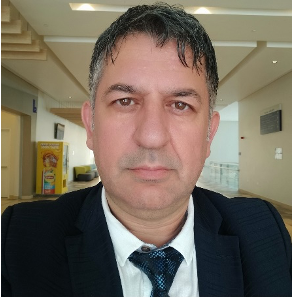
Prof.Dr. Özcan Asilkan
Senior Lecturer
Business Analytics Department
Higher Colleges of Technology
Abu Dhabi, United Arab Emirates
Email: oasilkan@hct.ac.ae & oasilkan@gmail.com
Keynote Title: AI-Powered Personalized Learning Pathways
Bio: Professor Özcan Asilkan is an experienced Academician and Computer Science Engineer with a demonstrated experience at universities as well as in industries of software development, manufacturing, tourism and health. His research interests focus on Computer Science, Management Information Systems, Business Analytics, Database Systems, Data Mining, Artificial Intelligence, CRM and Tourism. With almost 30 years of academic and industry experience, he has held many professional engagements and teaching activities throughout the world; such as Turkey, North Cyprus, Germany Albania, North Macedonia, Kosovo, Kazakhstan, Nigeria, United Arab Emirates, etc. As an Academician, he founded and chaired the departments of Computer Engineering and Management Information Systems at various universities. Among the major courses he has taught over the years are Database Systems, Data Mining, Artificial Intelligence, MIS, Algorithms, Programming, Statistics, Business Strategies, etc. He worked in Dean, Chair and Lecturer positions at various universities throughout the world. He served as Chair and Keynote Speaker at international conferences. As a Computer Science Engineer, he worked at various professional positions like System Analyst, Database Administrator, Application Developer and took part in professional IT and Business Development projects. Since July 2024, he has been working as a Senior Lecturer at Higher Colleges of Technology (HCT) in Abu Dhabi, United Arab Emirates.

Dr.Atefeh Ferdosipour
Educational Psychologist PhD | AI & Education Researcher | Academic Consultant
Keynote title: “Will be announced”
Bio: Dr.Atefeh Ferdosipour holds a Ph.D. in Educational Psychology and has over 15 years of academic and research experience. With a strong background in both teaching and scholarly work, Dr. Ferdosipour has published dozens of research papers, particularly focusing on the intersection of educational development and artificial intelligence.
Dr. Ferdosipour serves as an editor for several international journals and regularly acts as a scientific reviewer for major international conferences. Additionally, she has contributed as a member of organizational and scientific committees in numerous global conferences, playing a key role in promoting academic excellence and interdisciplinary collaboration.
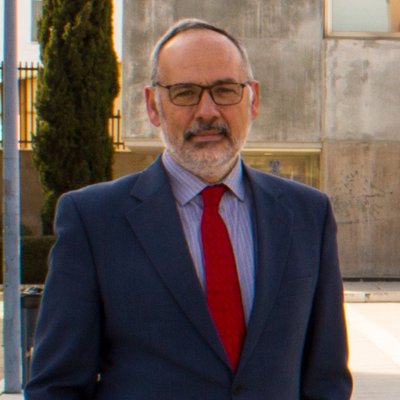
Prof. Dr. Jesus Gracia Laborda
PhD, EdD, MAFLL, MEd
Full Professor of Language Education
Technical Director of Cardenal Cisneros
Universidad de Alcalá, Spain
Keynote Title: Geopolitics in Education: Different Perspectives of Teacher Education Worldwide
Abstract: Teacher education is increasingly shaped by geopolitical dynamics, with nations investing strategically in educational infrastructure to assert global influence and address local challenges. In Asia, countries like China and India continue to expand teacher training through national reforms and global partnerships. Central Asia, particularly Kazakhstan and Uzbekistan, has emerged as a significant player. Kazakhstan’s Abai University, ranked 131st in the QS Asia University Rankings 2025 1, exemplifies the region’s commitment to excellence in teacher education, showing strong performance in academic reputation and graduate employability. Uzbekistan’s Tashkent Institute of Irrigation and Agricultural Mechanization Engineers (TIIAME) also ranks among the top universities in Central Asia 2, reflecting the country’s strategic push to modernize education and prepare future educators.
In North America, teacher education is influenced by debates on equity, inclusion, and digital transformation, with universities in Canada and the U.S. leading innovations in culturally responsive pedagogy. South America, particularly Brazil and Chile, is focusing on decentralization and community-based teacher training to address regional disparities. Europe presents a diverse landscape: Nordic countries emphasize research-based teacher education, while Eastern Europe is aligning with EU standards to enhance mobility and quality assurance.
This global panorama reveals how teacher education is not only a pedagogical concern but also a geopolitical tool. Central Asia’s rise, especially through institutions like Abai and TIIAME, signals a shift in educational leadership and offers new models for preparing teachers in a rapidly changing world.
Bio: Dr. Jesús García Laborda holds a Bachelor’s Degree in English Philology (Universidad Complutense de Madrid, 1988), an MA in ESL (University of Georgia), an MA in English Language and Literature (University of Wisconsin), a PhD in English Philology, and a European Doctorate in Didactics (Universidad Complutense de Madrid). He has completed four six-year teaching terms, three six-year research terms, and one transfer. He has served as Assistant Professor at the University of Georgia and the University of Wisconsin, and as Visiting Scholar at Penn State University and the University of Antwerp. His international teaching experience includes postgraduate courses in Lithuania, Cyprus, Turkey, Colombia, Brazil, and Kazakhstan, where he collaborates with four universities as a PhD Guest Lecturer in Language & Literature Research Methods and supervises three PhD students.
He currently teaches in master’s programs at Universidad Católica de Ávila, UNED, and Universidad de Jaén, and serves as Coordinator of the PhD program in Education at UNIE University in Madrid. He has led four R&D projects and participated in eight others, alongside six teaching innovation projects at Universidad de Alcalá and Universidad Politécnica de Valencia. Since 2013, he has directed the RELTS research group, which includes members from Instituto Franklin-UAH. He has authored over 270 publications and is a specialist in language teaching, assessment, educational technology, and bilingual education.
He was Dean of the Faculty of Education at Universidad de Alcalá (2019–2025) and is currently Technical Director of Cardenal Cisneros, affiliated with Universidad de Alcalá, in a role akin to Associate Provost.